Insights from Joey Barnett, Partner at WR Immigration, and Jenny Zhan, CEO of Beyond International Group
For EB-5 investors evaluating how to position their filing for the fastest possible adjudication, the current landscape offers a clear structural advantage: rural projects with I-956F approval sit at the front of the USCIS processing queue.
In a recent webinar, immigration attorney Joey Barnett of WR Immigration and Jenny Zhan, CEO of Beyond International Group, examined the current EB-5 landscape, USCIS processing priorities, and what investors should look for when evaluating projects. This article summarizes the key takeaways—and what they mean for investors considering the EB-5 path.
Where Employment-Based Immigration Stands Today
The EB-5 investor profile has shifted meaningfully over the past two years. According to banking data shared during the webinar, roughly 80% of EB-5 wire transfers received in 2026 have originated from within the United States—a significant reversal from the program’s history, when the majority of investors filed from overseas.
The primary driver is concurrent filing. Since the EB-5 Reform and Integrity Act of 2022, investors already in the U.S. on F-1, H-1B, L-1, or other visas can file their I-526E and I-485 simultaneously. For investors, this means receiving an Employment Authorization Document (EAD) and Advance Parole while their case is pending—providing work and travel flexibility independent of their current visa status.
For professionals in EB-2 or EB-3 backlogs with priority dates from 2016 or 2017, the implications are substantial. EB-5 concurrent filing also serves as a safety net: if something happens to an investor’s H-1B status, they remain in a period of authorized stay rather than losing status entirely. For families with U.S.-citizen children, this is a meaningful form of protection.
Other employment-based categories are becoming more difficult to navigate. EB-1 denial rates have increased. EB-2 NIW scrutiny has intensified. EB-5 remains accessible for investors who can meet the investment threshold.
Why Rural EB-5 With I-956F Approval Represents the Strongest Filing Position
USCIS has made its adjudication priorities clear: rural projects receive priority processing. However, there is a critical nuance that many investors overlook.
The advantage is not simply about rural designation. USCIS has structured separate adjudication queues based on whether a project’s I-956F has been approved. In practice, USCIS is not adjudicating I-526E petitions associated with projects still awaiting I-956F approval.
The practical implication: an investor who files their I-526E today with a rural project that already holds I-956F approval enters the fastest available processing track—and could receive adjudication before someone who filed months earlier with a project still pending its I-956F review.
USCIS clarified this prioritization structure further in recent weeks. For investors, the signal is unambiguous: project-level USCIS approval is now central to processing speed.
Retrogression: What the Data Indicates
Will rural visa numbers retrogress? Retrogression is a possibility over time, precisely because USCIS is processing rural cases faster—meaning rural visa numbers will be consumed more quickly than other categories.
Based on available data, however, retrogression does not appear imminent before September 2026. When the new fiscal year begins in October, a fresh allocation of visa numbers becomes available. WR Immigration has filed a FOIA request and is actively litigating to obtain more granular data from USCIS on receipts and approvals.
The takeaway: the filing window is open, but it is not indefinite. Filing now with a rural, I-956F-approved project represents the clearest strategy to position ahead of any future backlog.
A Common Misconception: EAD and Retrogression
One of the most frequently raised questions during the webinar: if retrogression occurs after an investor files, does the investor lose their EAD?
No. Once an I-485 is filed while the visa category is current, the EAD and Advance Parole remain valid regardless of subsequent changes to the Visa Bulletin. Investors can renew them indefinitely until their priority date becomes current again. This is widely misunderstood and should factor into every investor’s timing analysis.
Source of Funds: Documentation Discipline Is What Matters
The I-526E is fundamentally a source-of-funds case. USCIS does not evaluate an investor’s net worth—the focus is on tracing how the specific $800,000 being invested was lawfully earned.
Acceptable sources include salary, RSUs, HELOCs, gifts (with donor documentation), 401(k) loans, securities-backed lines of credit, cryptocurrency gains, and self-directed IRAs. No single source is preferred by USCIS. What matters is how clearly the paper trail is documented.
RSUs remain one of the cleanest sources. The tracing path—equity earned through employment, shares vested, sold, and proceeds transferred—is straightforward and easy for USCIS to follow.
On partial investments: while investors can technically file while “actively in the process of investing,” USCIS scrutiny is increasing. Requests for Evidence (RFEs) are arriving in as few as 3–4 months. For investors with available capital, investing the full $800,000 at filing is the stronger approach. For those pursuing a partial investment, the balance should be in place within 120 days.
How to Evaluate an EB-5 Project: Think Like a Real Estate Investor
Immigration may be the reason for the investment, but real estate execution risk is what determines whether capital is returned. Evaluating an EB-5 project the way a professional real estate investor would is essential.
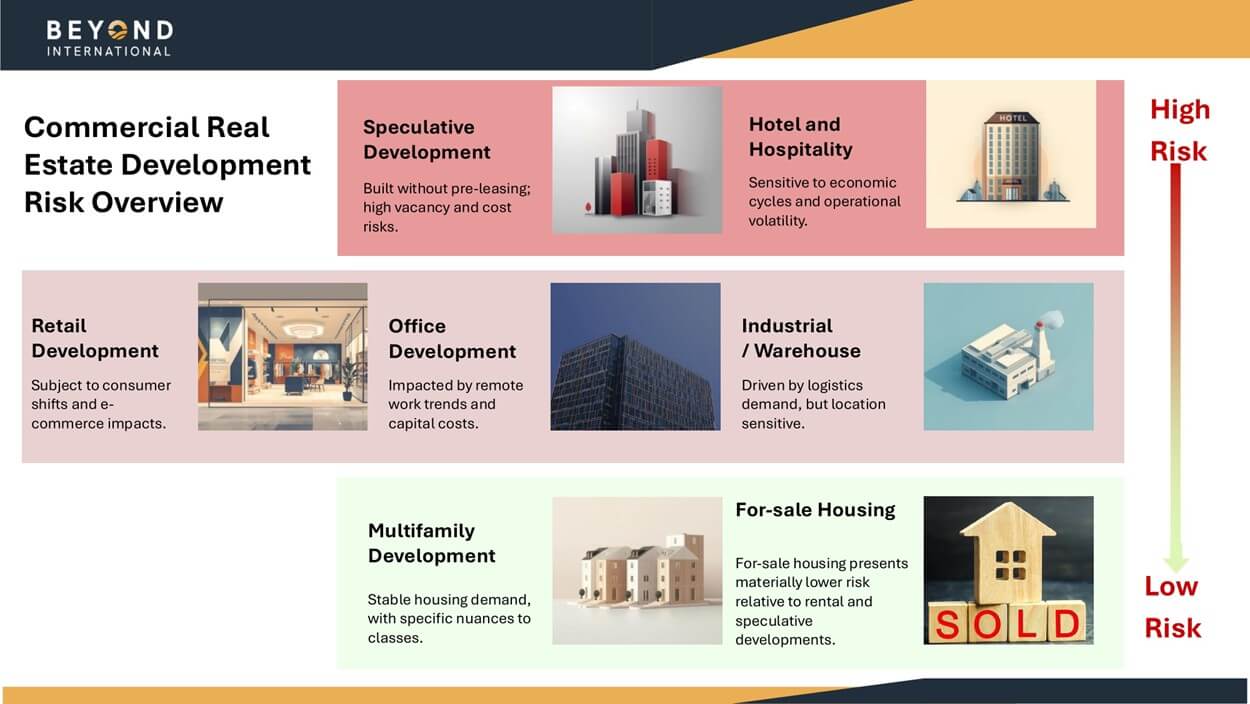
The risk spectrum matters. Speculative development and hotel/hospitality projects sit at the highest risk level—greatest uncertainty on exit. For-sale residential housing sits at the lower end. People always need places to live, units can be sold individually as they complete, and conventional lenders are more willing to provide project financing.
Beyond property type, there are four layers of development risk that investors should evaluate, from highest to lowest:
- Regulatory risk: Select projects that are fully entitled and under construction.
- Construction risk: Look for completion guarantees and maximum cost guarantees from the developer.
- Financial risk: Ensure the project does not rely solely on EB-5 capital for completion.
- Market risk: Select projects with reasonable, comparable exit pricing supported by market data.
Why the NCE Manager Matters More Than the Regional Center
Most investors focus their due diligence on the regional center. The more relevant question is about the NCE Manager. The regional center handles USCIS compliance and indirect job counting. The NCE Manager is the entity that monitors the investment on a day-to-day basis, ensures construction milestones are met, and has the capital infrastructure and expertise to intervene if challenges arise.
A useful due diligence question for any EB-5 project: “What happens if the project encounters difficulties? How would you, as the NCE Manager, protect the investment? Have you done it before?”
Beyond Paradise 1: Project Overview
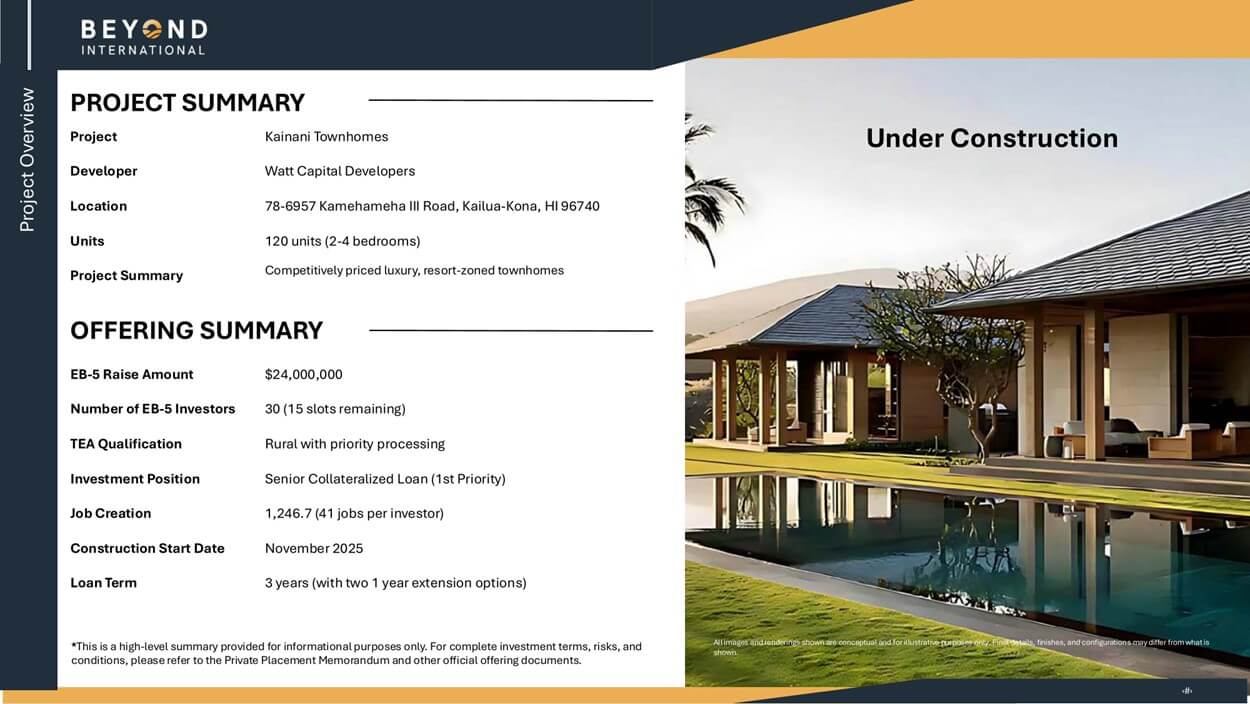
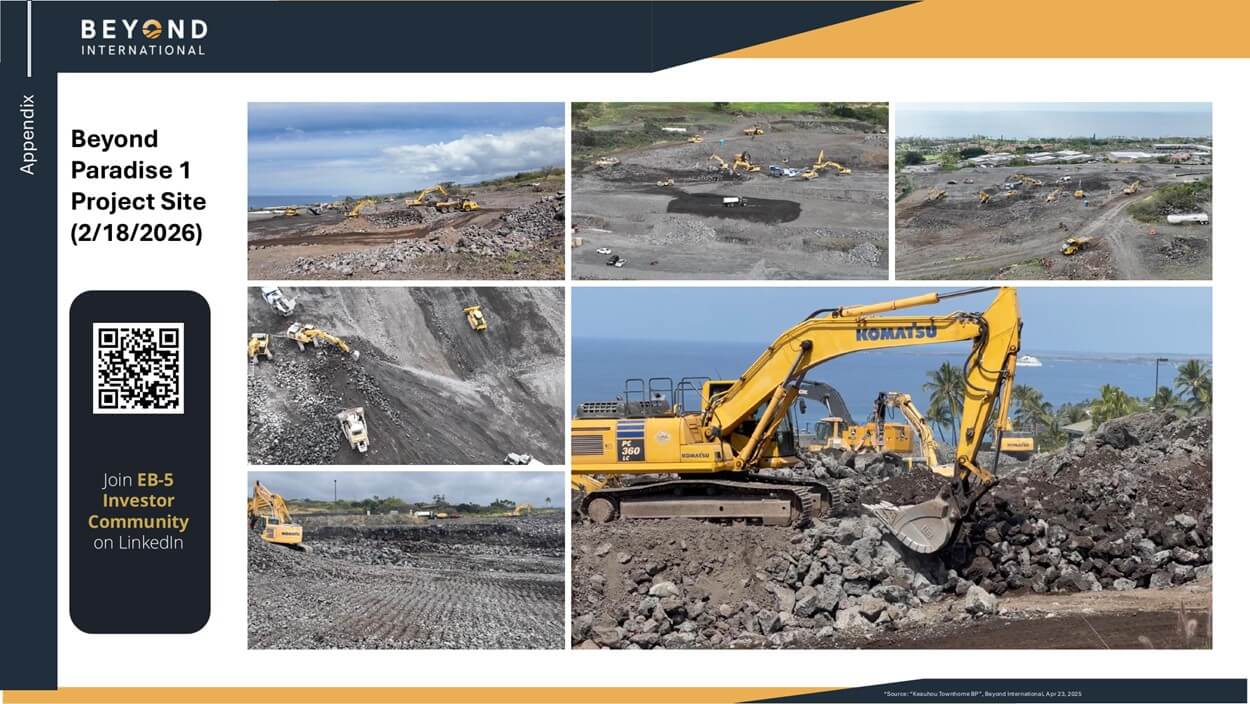
Beyond Paradise 1 is a rural EB-5 project with I-956F approval, positioning it in the fastest adjudication queue available. Here is a summary of the project’s key attributes.
Immigration Protections
- USCIS I-956F approval: I-526E filings associated with this project enter the rural priority adjudication queue
- I-526E denial refund: Capital returned within 3 months, compared to the industry standard of 6 months
- Withdrawal provision: Investors who complete their sustainability period or choose to withdraw can request capital return within 6 months
- Job creation: Over 100 jobs created as of January 2026, with an average of 41 jobs per investor—well ahead of the 10-job minimum
Project Details
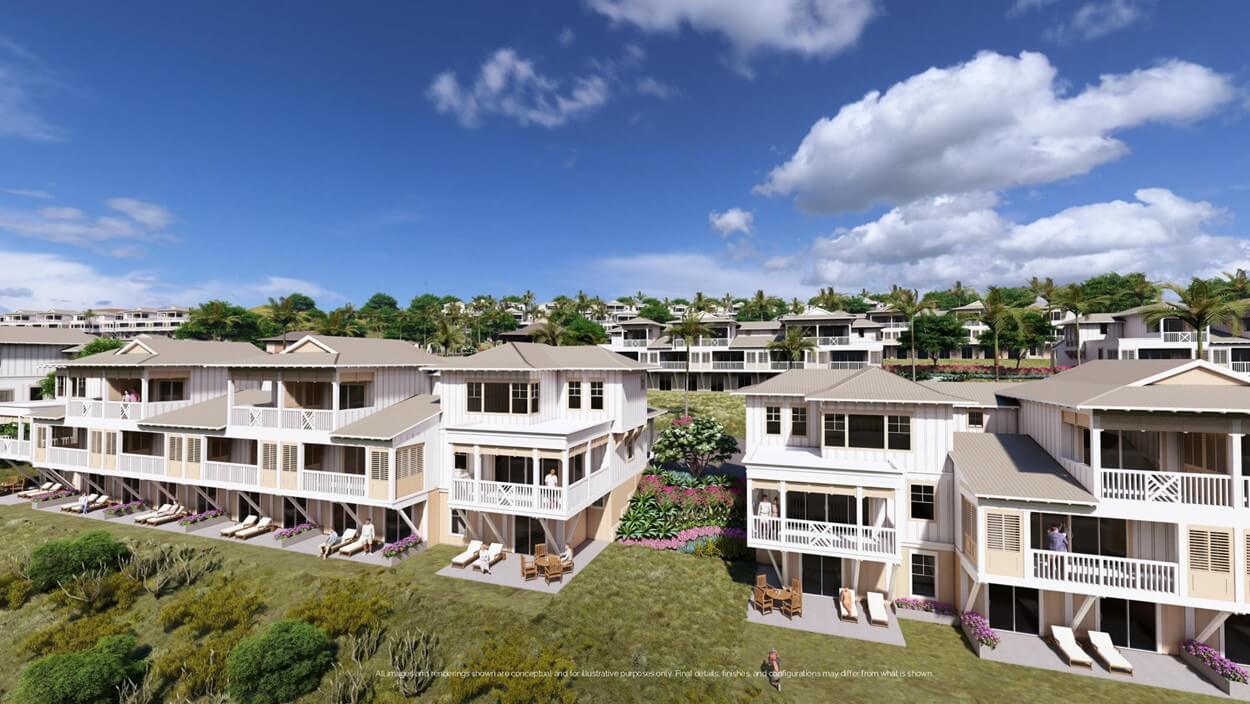
- Kainani Townhomes: 120 for-sale townhomes on a 24.5-acre oceanfront site in Keauhou, Kailua-Kona, Big Island, Hawaii
- Two-story units with 2–4 bedrooms, averaging 1,700 sq ft, with private terraces and garages
- Pricing starts at $1.29M for 2-bedroom units
- Construction commenced September 2025; pre-sales begin mid-2026
Developer
Watt Capital Developers, with 77 years of development experience and two prior resort communities completed in the same Kona area—including Na Hale O Keauhou (2005), located 0.5 miles from the project site.
Regional Center
Hawaii Economic Investment Center: 100% project approval rate, 700+ investors, and over $190 million in EB-5 capital repaid.
Capital Structure
EB-5 capital of $24 million represents 13.7% of the $174.7 million total project budget, structured as a senior collateralized loan in first-priority position. The remaining capital comes from developer equity (~$61M) and equity from sales proceeds (~$90M). EB-5 investors sit at the top of the repayment waterfall.
The project includes a Completion Guarantee and Maximum Cost Guarantee from the developer. A UCC Financing Statement, Pledge Agreement, and Ownership Certificate secure the senior lien position. Over $20 million in bridge loan capital has been committed to ensure funding continuity if EB-5 capital flow is disrupted.
Ready to Discuss Your EB-5 Options?
The window for concurrent filing remains open, and Beyond Paradise 1’s I-956F approval places investors in the fastest processing queue available.
Schedule a Free Consultation Today.
Join the EB-5 Investor Community on LinkedIn for market updates, immigration insights, and due diligence discussions.