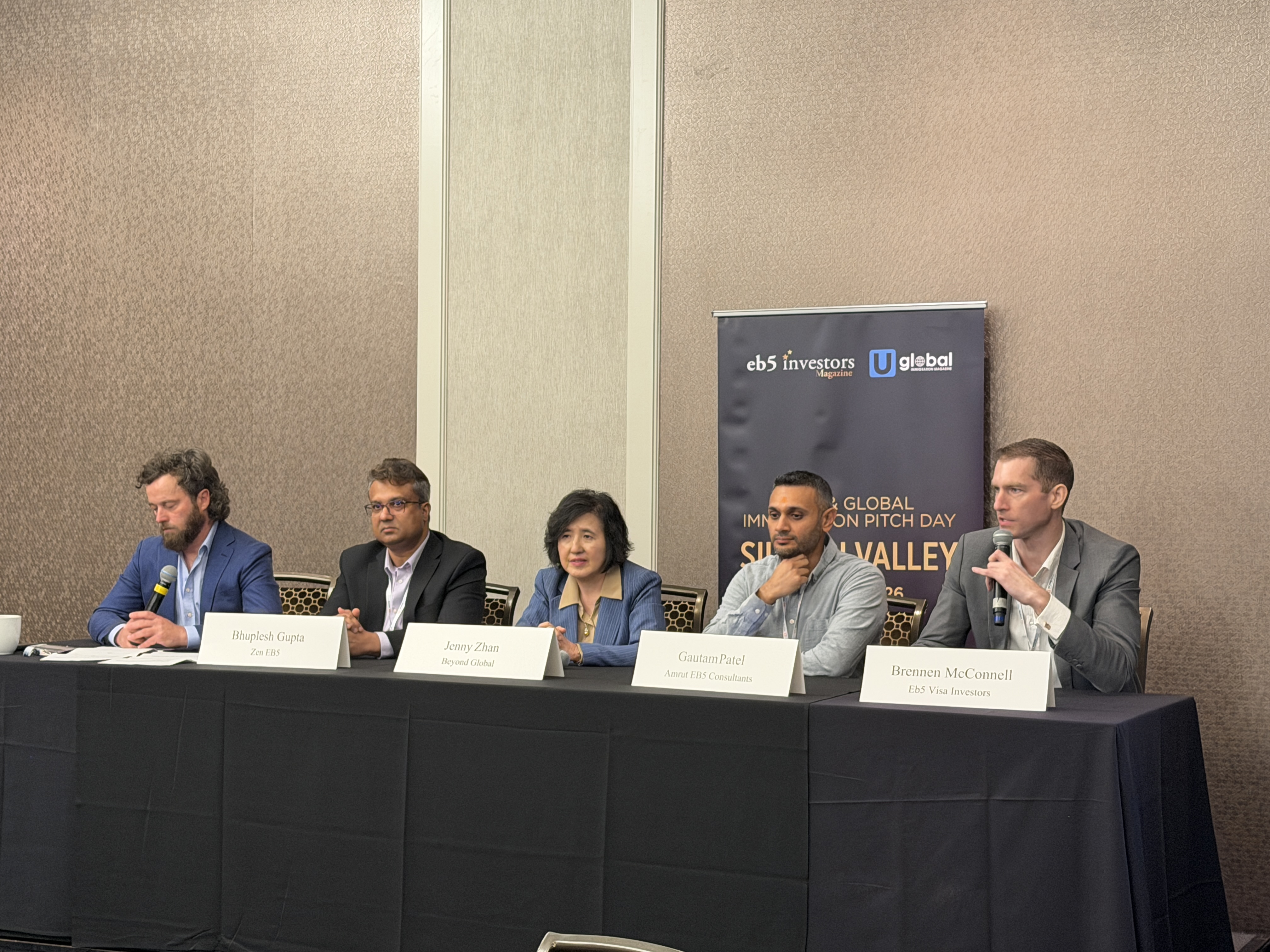
On May 16, 2026, the 2026 EB-5 & Global Immigration Forum convened in the heart of Silicon Valley, drawing the country’s leading immigration attorneys, regional center operators, and EB-5 advisors. Beyond International Group CEO Jenny Zhan was invited to the headline panel to address the question dominating the room: how Silicon Valley H-1B professionals should restructure their U.S. residency strategy in the middle of a tech layoff cycle. The consensus from the dais was direct. For Silicon Valley professionals on H-1B, the 2026 layoff cycle has made one fact undeniable: a non-immigrant work visa is not a residency plan. It is an employer-controlled status with a 60-day expiration clock attached to it. This is why the EB-5 backup plan for H-1B holders has moved from “nice to have” to a core financial decision for high earners — particularly with the September 30, 2026 grandfathering deadline now less than five months away. EB-5 is no longer just an immigration pathway. For tech professionals earning $250K+ at risk of separation, it is functioning as career insurance — and the filing window is closing.
1. Why the H-1B Backup Plan Conversation Changed in 2026
The forum panel returned repeatedly to the same theme: H-1B has structural fragilities that don’t show up in normal times but become acute during a layoff cycle. Three of those fragilities are now compounding simultaneously.
- The 60-day grace period is brutal in practice. If a sponsoring employer terminates you, U.S. immigration law gives you 60 days to find a new H-1B sponsor, change status, or leave the country. In a hiring freeze, 60 days is not enough.
- The $100,000 H-1B visa fee proposal. As Beyond International Group CEO Jenny Zhan recently outlined in American Bazaar, the proposed $100,000 H-1B fee is reshaping how Indian and Chinese professionals price the H-1B path against EB-5 — and it is shifting the math decisively.
- Green card backlog risk for India and China. EB-2 India retrogressed sharply in the June 2026 Visa Bulletin. The traditional employer-sponsored EB-2/EB-3 route is now a 10–20 year horizon for many filers — long after their children age out of derivative eligibility.
In the current environment, EB-5 is the only employment-based green card category that is current for every country and statutorily set up for fast adjudication. That is the structural advantage driving the 2026 surge in H-1B-to-EB-5 conversions.
2. What Is the September 30, 2026 Grandfathering Deadline?
Grandfathering is the legal mechanism that lets an EB-5 investor lock in current program rules at the moment of filing. Under the EB-5 Reform and Integrity Act of 2022 (RIA 2022), the Regional Center Program is authorized through September 30, 2027 — but the grandfathering protection for petitions filed on or before September 30, 2026 is the more important date for new investors.
- Filing protection. If your I-526E petition is on file before September 30, 2026, USCIS must continue processing it under the current rules even if Congress later modifies the program — including if regional center reauthorization lapses.
- Rule lock-in. The $800,000 minimum, the 20% rural set-aside, and the priority processing benefit are all locked at filing. Future regulatory changes do not apply to grandfathered petitions.
- The real preparation window is shorter than the calendar suggests. Source of funds documentation, fund transfer compliance, and project subscription typically take 6–10 weeks of focused work. The actionable filing window is closing now — not in September.
3. Why Rural EB-5 Is the Specific Vehicle High-Earners Are Choosing
Not all EB-5 projects file the same way. The rural EB-5 set-aside under RIA 2022 was designed to direct investment capital into qualifying rural areas — and Congress gave rural filings two structural advantages that urban TEAs do not get.
- Statutory priority processing. USCIS is required to prioritize the adjudication of rural EB-5 petitions. In practice this is currently producing I-526E approvals in months, not years.
- 20% reserved visa allocation. Of the annual EB-5 visa pool, 20% is reserved exclusively for rural investors. This category is current for every country of chargeability — including India and China — meaning no retrogression wait between I-526E approval and conditional green card.
- I-956F-approved projects de-risk the filing. When the project itself has received USCIS Form I-956F approval, the project’s legal structure, job creation model, and capital deployment have already been federally reviewed. Subsequent I-526E petitions skip that layer of risk.
For Beyond Paradise 1 — Beyond International Group’s rural EB-5 project in Kailua-Kona, Hawaii Island — this combination is documented, not theoretical: I-956F approved, an investor’s I-526E approved in just seven months, 103 EB-5 qualifying jobs already created with construction underway, and an average of approximately 35 additional jobs projected per month. Watt Companies, the developer, has been operating in Hawaii since 1947.
4. Key Questions for Your EB-5 Backup Plan Due Diligence
- Does the project have I-956F approval? Without it, your I-526E petition carries project-level review risk in addition to your own eligibility review.
- Is the project in a verified rural TEA? Rural designation must satisfy USCIS criteria at the time of filing — verify the underlying census and MSA documentation, not the marketing label.
- What is the realistic source of funds preparation timeline? For most high-earning W-2 professionals, salary and stock-based compensation paths run 6–10 weeks with experienced counsel. Start before, not after, the project subscription.
- What is the loan term and exit structure of the NCE? A clean exit requires aligned loan tenor with the 2-year sustainment period — not redeployment dependency.
- Is job creation already documented? Construction-stage projects with verifiable, accruing EB-5 jobs reduce the I-829 risk profile compared with projects still in pre-construction.
- Who is the NCE Manager, and what is their track record? The NCE Manager carries fiduciary responsibility for capital deployment, reporting, and exit. Verify approval history, capital returned, and ongoing project management capacity.
Summary: The EB-5 Backup Plan Feature Set
| Feature | Why It Matters to You |
| Grandfathering Protection | Filing before September 30, 2026 locks in current EB-5 rules — even if Congress later changes them. |
| Rural Priority Processing | Rural EB-5 petitions are statutorily prioritized by USCIS — currently producing approvals in months, not years. |
| I-956F Project Approval | USCIS has already vetted the project — your I-526E does not get held back by project-level review. |
| Visa Set-Aside (20% Rural) | Rural reserved category is current for every country, including India and China — no retrogression wait. |
| No 60-Day Layoff Clock | Conditional permanent residency removes the 60-day H-1B grace period exposure entirely. |
| Career & Geographic Mobility | Switch employers, start a company, or relocate within the U.S. without filing a new petition. |
The Bottom Line: H-1B professionals who treat their visa as a residency plan are the ones who get caught in 60-day windows during a layoff cycle. The investors moving now are not buying a green card; they are buying optionality — the freedom to switch employers, start a company, weather a downturn, and stay in the U.S. on their own terms. The September 30, 2026 grandfathering deadline is what makes 2026 the structural moment. After that, filing protection under current rules is no longer available to new petitioners.
Beyond International Group serves as fiduciary NCE Manager for our rural EB-5 projects, applying institutional underwriting and ongoing oversight to every capital placement we accept.
If you are seeking an EB-5 project with I-956F approval, documented job creation, statutory priority processing, and a structured exit path, Beyond Paradise 1 is an opportunity not to be missed.